A must: the markets
The Provençal market is one of the easiest ways to experience Antibes in the morning. Fruit, vegetables, herbs, cheeses and Mediterranean products fill the covered market on Cours Masséna, right in the Old Town.
Opening days and times vary by season, so check the current schedule before visiting.
What can you see in Antibes in one day?
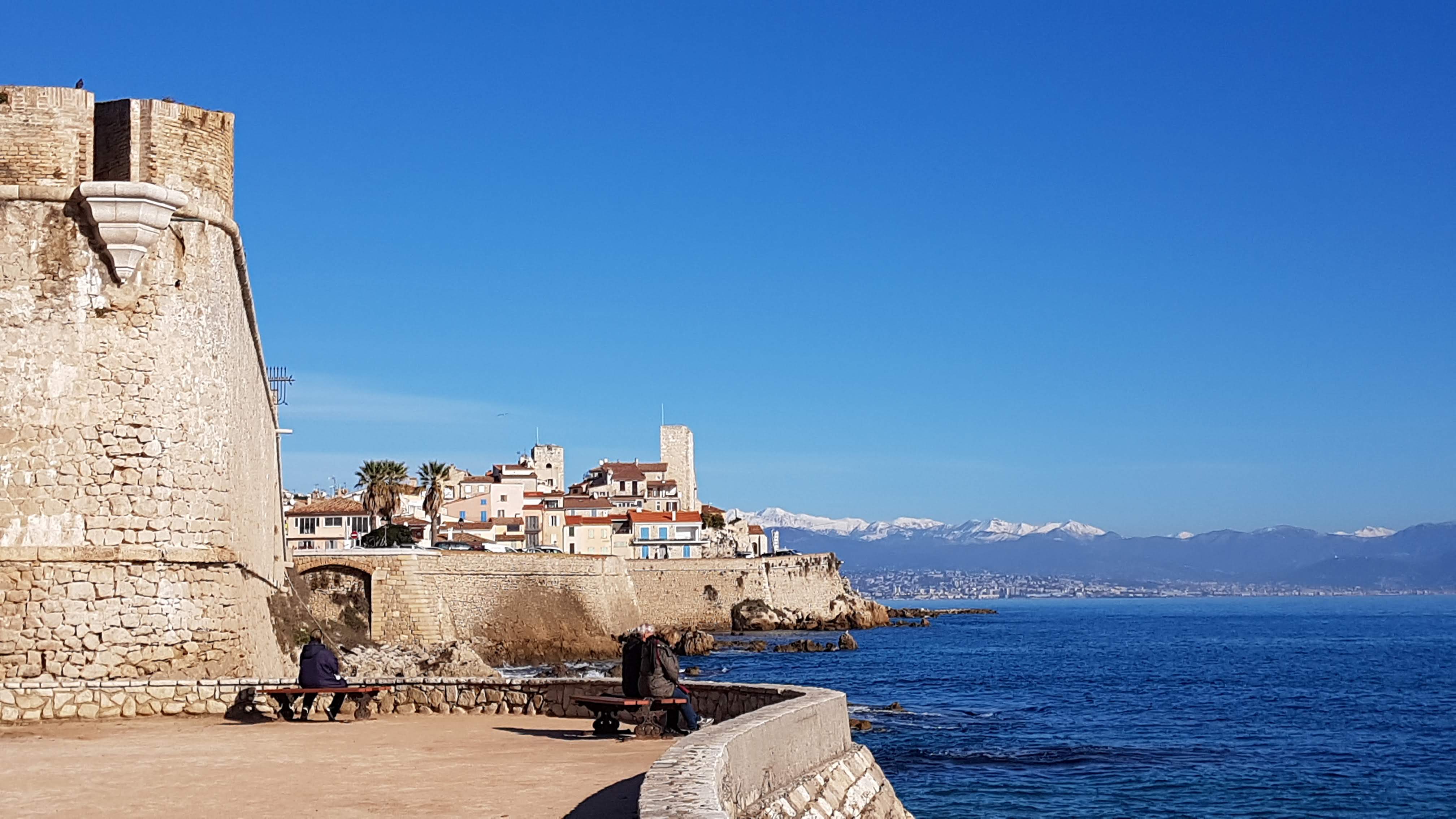
If this is your first visit, one day is enough to discover several sides of Antibes without rushing. Start in Antibes Old Town with the Provençal market, Cours Masséna, the narrow streets and the ramparts.
The Picasso Museum, housed in the Château Grimaldi overlooking the Mediterranean, fits naturally into this walk. Picasso worked there in 1946, and the museum now also presents works by Nicolas de Staël, Hans Hartung and Anna-Eva Bergman.
After lunch, either continue towards Port Vauban and Fort Carré or head to Cap d’Antibes for coves, coastal scenery and part of the coastal path. If beaches and a livelier seaside atmosphere are your priority, continue towards Juan-les-Pins.
Old Antibes, Cap d’Antibes or Juan-les-Pins: which should you choose?
Old Antibes is particularly suitable if you want to walk to restaurants, the market, shops, the harbour and cultural attractions.
Cap d’Antibes is better suited to travellers looking for Mediterranean landscapes, beaches, coves and coastal walks.
Juan-les-Pins has a more seaside-oriented atmosphere with beaches, restaurants and summer entertainment. Port d’Attache also offers an apartment in Juan-les-Pins.
Can you visit Antibes without a car?
Yes. A car is not essential for a stay centred on Old Antibes. The historic centre, Provençal market, Port Vauban, Picasso Museum and several beaches can all be reached on foot.
The railway station also makes it possible to explore other Riviera towns without having to park in busy centres. You can easily combine your stay with Cannes, Cagnes-sur-Mer or Nice.
Visiting Antibes with children
Old Antibes works well for families because sightseeing can be mixed with short walks, the harbour, the market and time at the beach. La Gravette, Ponteil and Salis are among the beaches close to the main visitor areas.
Please note: Marineland Antibes permanently closed in January 2025 and should no longer be planned as an activity during your stay.
When should you visit the Provençal market?
The Provençal market is held under the covered market on Cours Masséna. Opening days and hours vary according to the season. The City currently announces a morning food market every day in summer and every day except Monday from September to May.
Going in the morning makes it easy to combine the market, Old Antibes and the Picasso Museum before the hottest and busiest part of the day.
What can you visit around Antibes?
Antibes is well positioned for exploring both the coast and the nearby hinterland. Biot offers a hilltop village associated with arts and glassmaking, while Vallauris is strongly linked to Picasso and ceramics.
To the west, Cannes and the Lérins Islands can fill another day. To the east, continue towards Cagnes-sur-Mer, Saint-Paul-de-Vence or Nice.